Rising political polarization is one of the defining features of American politics over the past two decades. The Republican and Democratic parties have become increasingly antagonistic, reducing opportunities for compromise and undermining trust in government, the media, and other social institutions. The graphs below examine the extent to which this polarization in national politics has affected state-level politics in Texas.
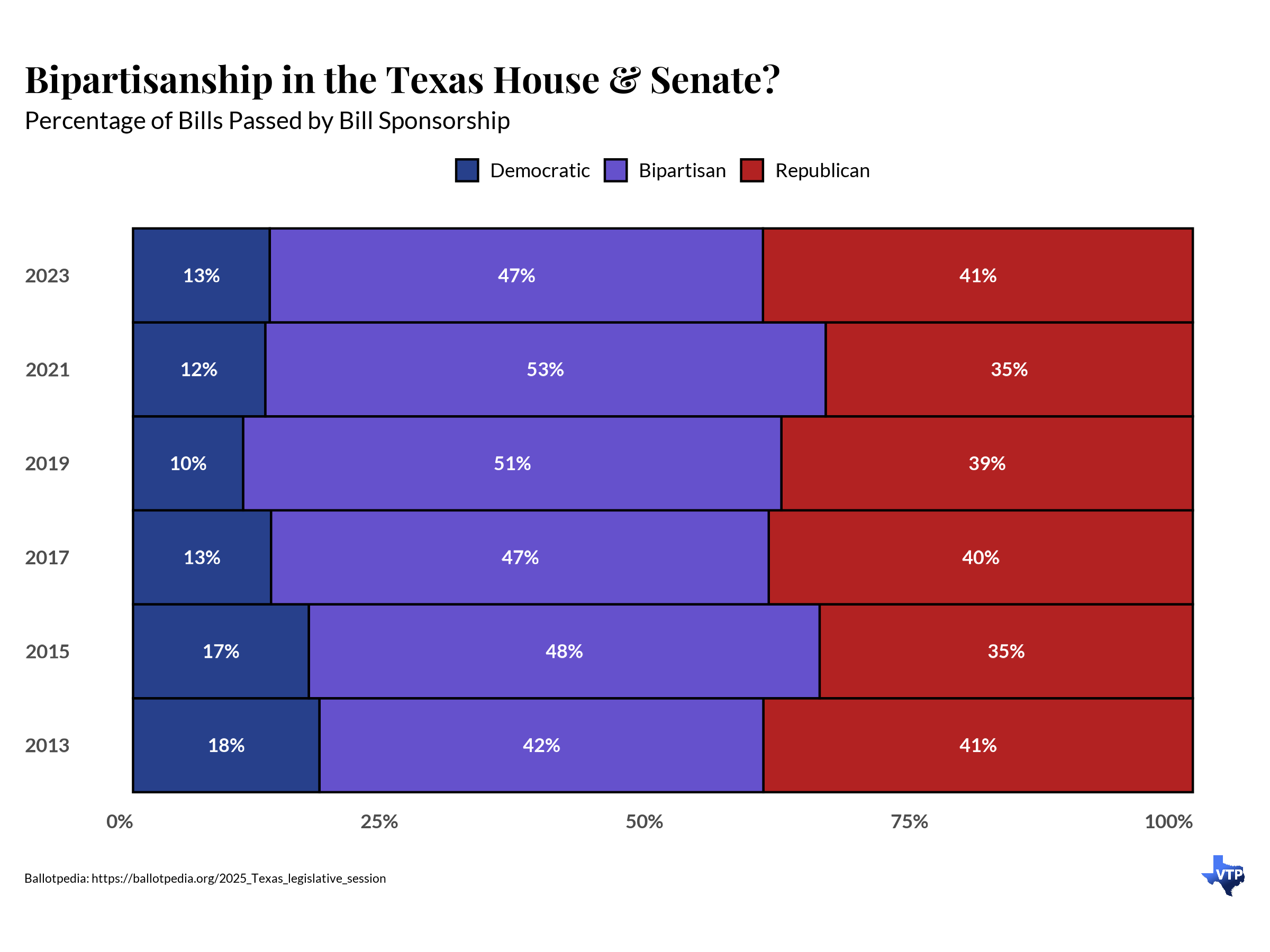
From one perspective, legislators themselves frequently report that the partisanship of Texas politics is not as intense as suggested by the national-level discourse. Even amidst intense fights over gerrymandering, abortion rights, and educational curriculum, legislators from both parties frequently point to a long tradition of cooperation. One indication is the high number of bills passed by the legislature with bi-partisan co-sponsors. Additionally, a significant number of bills with exclusively Democratic sponsorship are passed in each year.
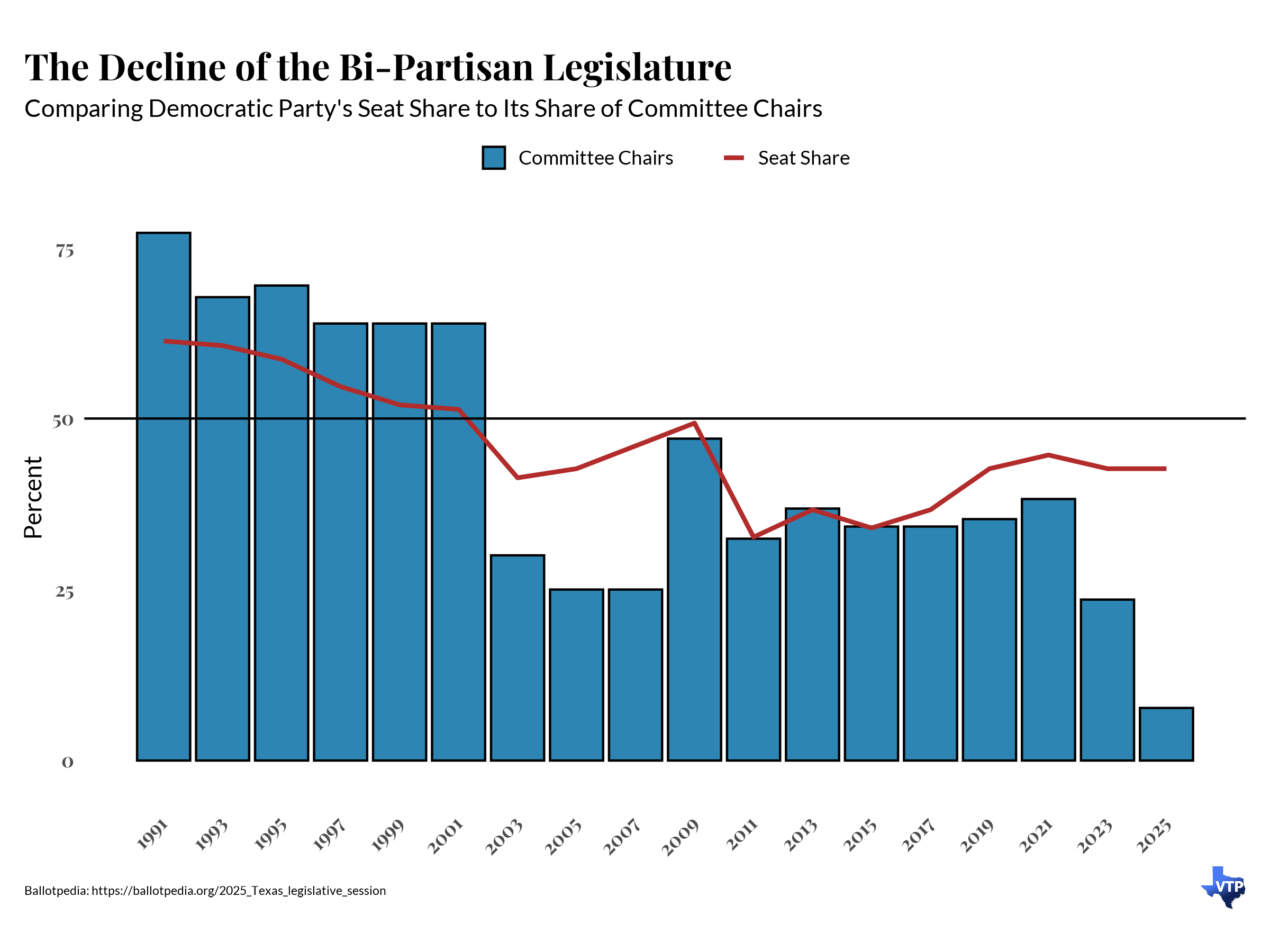
Additionally, there has been a long historical tradition in the Texas legislature of the majority party, electing the minority party (the Democrats since 2002) to chair a number of committees roughly equal to their proportion of seats in the legislature. This long bipartisan tradition was challenged in 2025, when many Republican legislators balked, ending the long practice and preventing Democrats from serving as chair on any committees in the House and only a handful in the Senate.
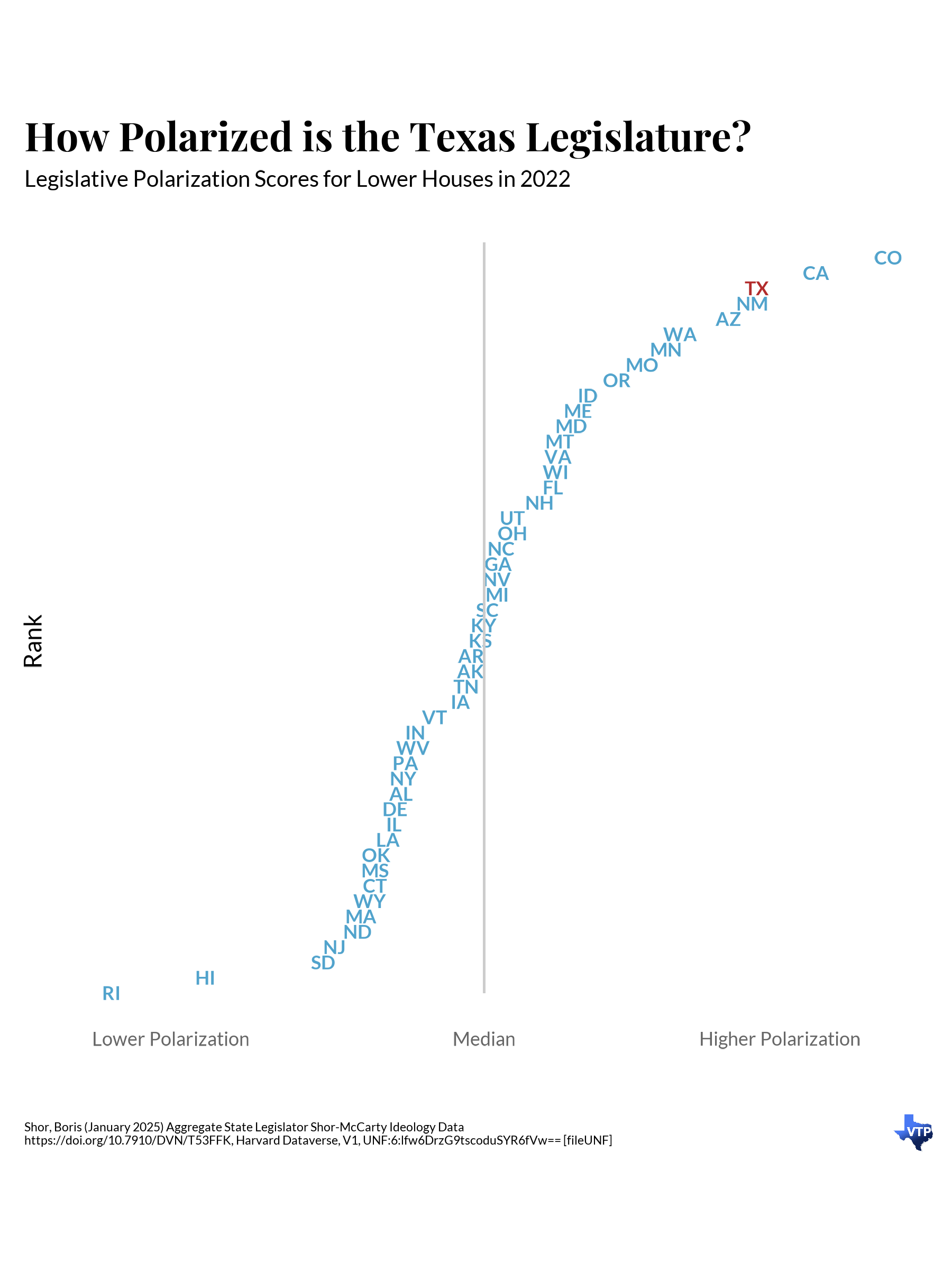
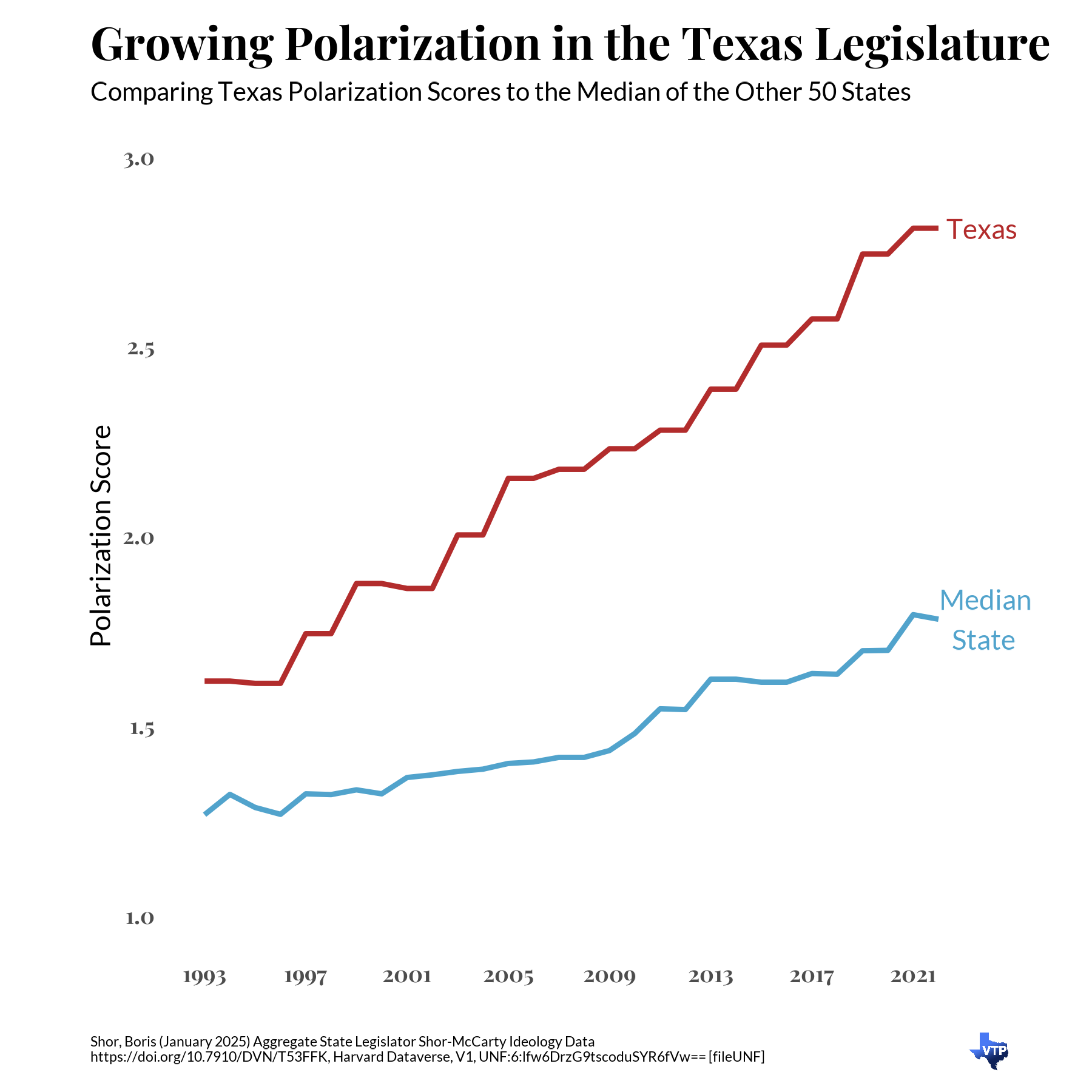
Rather than looking to bill sponsorship or committee chairs, Shor & McCarty (2022) measured polarization across US states using a combination of surveys of legislators and their roll call votes. Their findings suggest an overall pattern of intense and rising polarization across many states in the US. The charts below suggest a Texas that stands as one of the most polarized states in the country, driven by the significant distance between the ideological positions of Republican and Democratic legislators (which may not always be reflected in their votes). Additionally, Shor & McCarty’s data suggest that Texas has become significantly more polarized over the past 30 years, growing further from the typical state.